
Our Recent Immigration Success Stories
We are proud to share real immigration success stories
from our clients. Every case represents dedication,
strategic planning, and successful outcomes for people
building a better future.
12
Jun
2026

Claudia Reyes — Permanent Residency Approved
From Mexico to Canada: Claudia’s Spousal Sponsorship Success Story
Claudia Reyes dreamed of reuniting with her partner and beginning a new chapter together in Canada. While the spousal sponsorship process offered a pathway to permanent residency, the application required careful preparation, accurate documentation, and close attention to immigration requirements. Wanting to avoid delays, Claudia turned to professional guidance.
After a detailed assessment of her case, the team at Canada Immigration Global developed a personalized strategy for her Spousal Sponsorship application. We provided dedicated support throughout every stage of the process, ensuring her application was complete, accurate, and submitted with confidence.
Our Support Included
- Spousal Sponsorship eligibility assessment
- Personalized immigration strategy
- Documentation review and preparation
- Application submission guidance
- Permanent Residency support
- End-to-end immigration assistance
The Result
With expert guidance and a carefully prepared application, Claudia successfully received Canadian Permanent Residency through the Spousal Sponsorship program and was reunited with her partner after just 11 months.
Today, Claudia is building a new life in Canada alongside her partner, enjoying the security of permanent resident status and looking forward to a future filled with new opportunities, stability, and happiness together.
9
Jun
2026
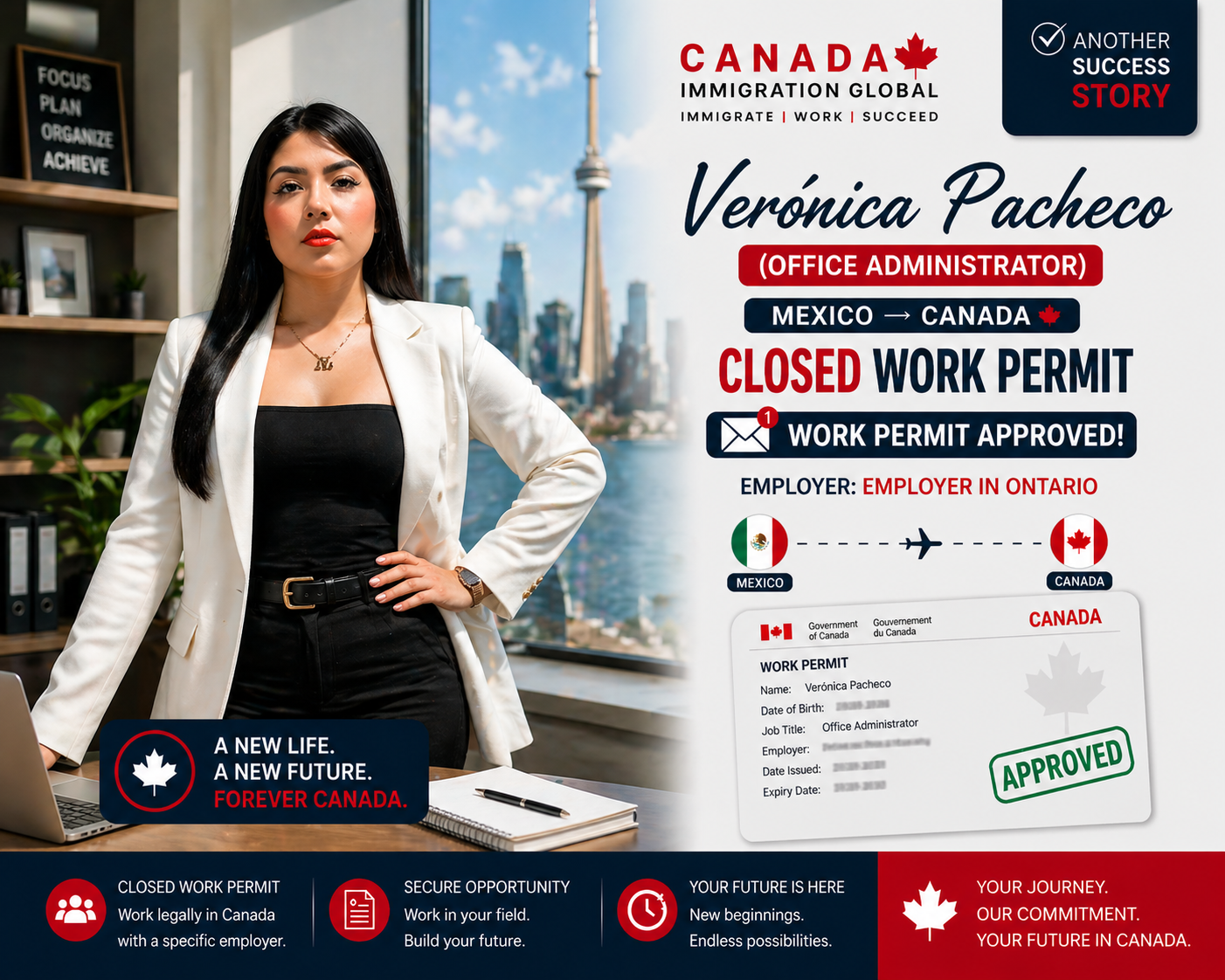
Verónica Pacheco — Closed Work Permit Approved
From Mexico to Canada: Verónica’s Work Permit Success Story
Verónica Pacheco aspired to build a rewarding career in Canada as an Office Administrator. She had secured an employment opportunity with an employer in Ontario, but navigating the closed work permit process, employer documentation, and application requirements required professional guidance to ensure a successful outcome.
After a comprehensive assessment of Verónica’s profile, the team at Canada Immigration Global developed a personalized immigration strategy tailored to her job offer and career goals. We provided step-by-step support throughout the Closed Work Permit application process, ensuring every document was accurate, complete, and submitted on time.
Our Support Included
- Closed Work Permit eligibility assessment
- Employer documentation guidance
- Application review and preparation
- Work permit submission support
- Personalized immigration consultation
- End-to-end immigration assistance
The Result
With expert guidance and a well-prepared application, Verónica successfully received approval for her Canadian Closed Work Permit, allowing her to begin her career with her employer in Ontario.
Today, Verónica is preparing to begin an exciting new chapter in Canada, where she will gain valuable international work experience, build a successful career as an Office Administrator, and create a strong foundation for her future.
4
Jun
2026
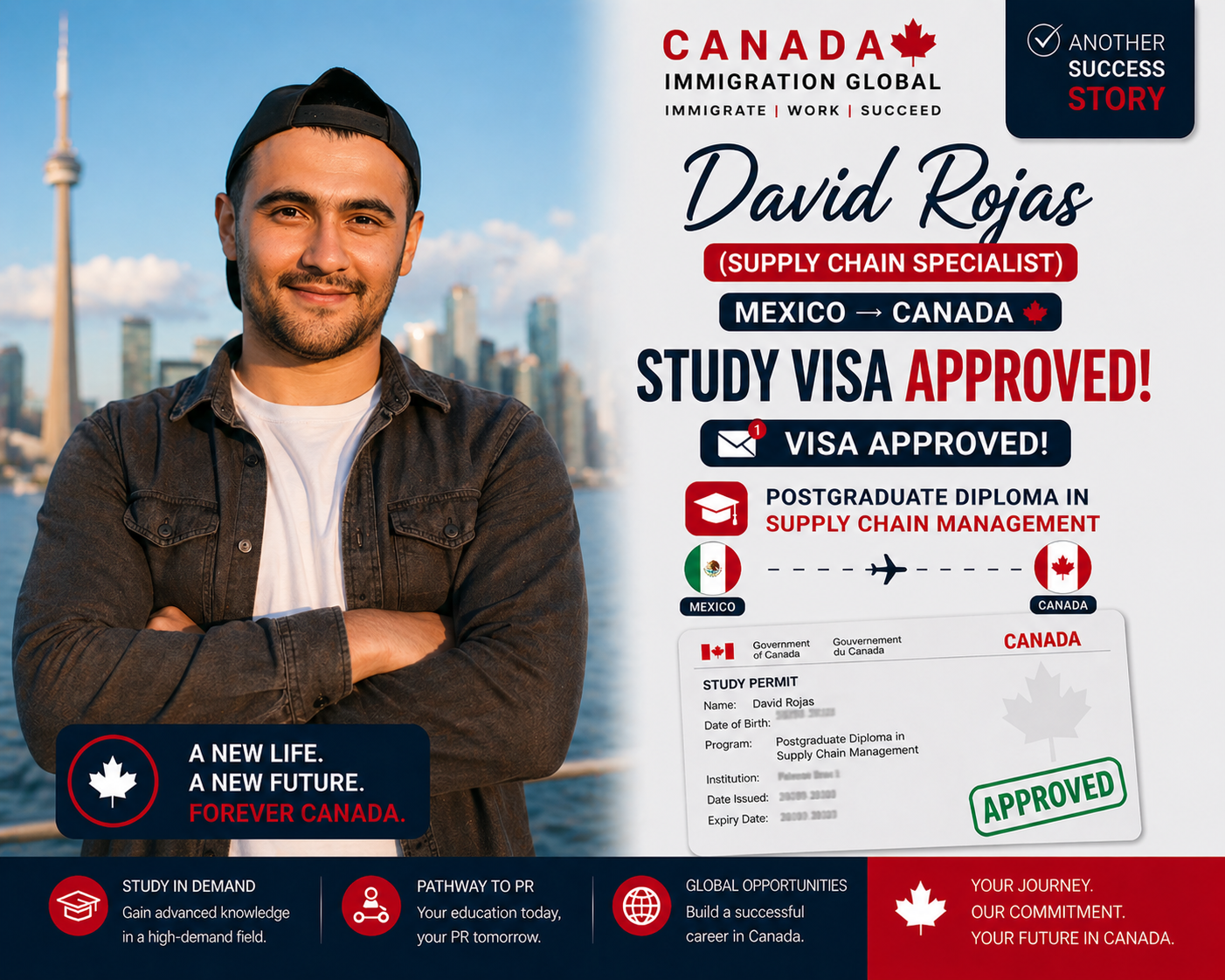
David Rojas — Study Visa Approved
From Mexico to Canada: David’s Study Abroad Success Story
David Rojas had a clear vision of advancing his career by pursuing higher education in Canada. As a Supply Chain Specialist from Mexico, he wanted to gain internationally recognized qualifications while opening the door to long-term career opportunities and a future pathway to Canadian Permanent Residency. However, navigating the study permit process and meeting all the application requirements seemed overwhelming without professional guidance.
After carefully evaluating David’s profile, the team at Canada Immigration Global created a personalized study permit strategy tailored to his academic background, career goals, and chosen program. We guided him through every stage of the application process for his Postgraduate Diploma in Supply Chain Management, ensuring his documentation was complete and his application was submitted with confidence.
Our Support Included
- Study permit eligibility assessment
- Program and documentation guidance
- Statement of Purpose (SOP) support
- Application review and submission assistance
- Visa processing guidance
- End-to-end immigration and education support
The Result
With expert guidance and a well-prepared application, David successfully received approval for his Canadian Study Visa and is now preparing to begin his Postgraduate Diploma in Supply Chain Management.
Today, David is preparing to study in one of Canada’s leading educational institutions, gaining the skills and international experience needed to build a successful career while creating a strong pathway toward permanent residency in Canada.
1
Jun
2026
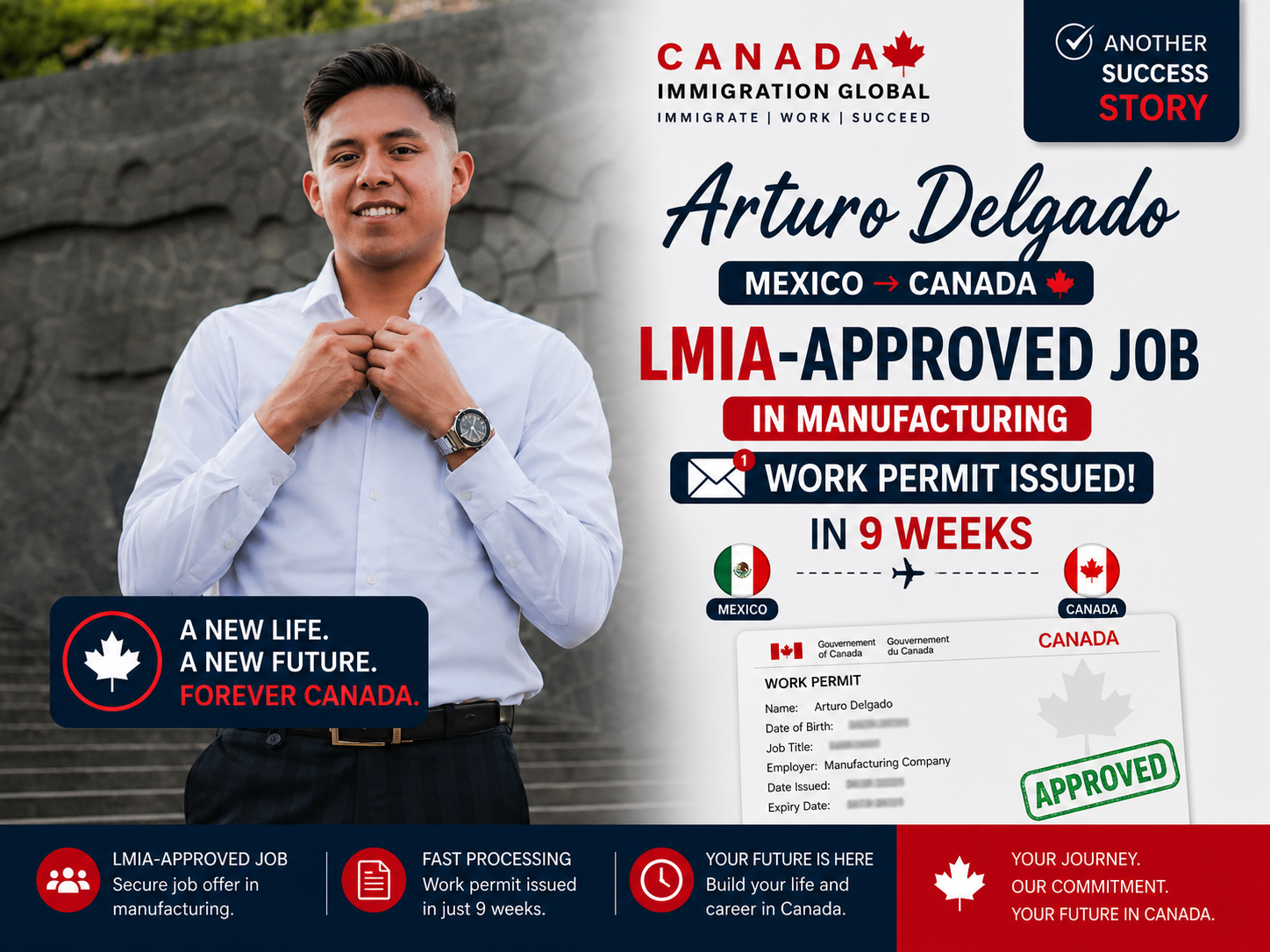
Arturo Delgado — LMIA Work Permit Approved
From Mexico to Canada: Arturo’s LMIA Work Permit Success Story
Arturo Delgado dreamed of building a successful career in Canada’s manufacturing industry while creating a brighter future for himself. As a skilled worker from Mexico, he knew that obtaining an LMIA-approved job offer and work permit would be the key to achieving his goals. However, navigating the employer requirements, documentation, and work permit process required experienced guidance.
After a thorough assessment of Arturo’s profile, the team at Canada Immigration Global developed a personalized strategy to help him secure an LMIA-approved job opportunity in Canada. We provided end-to-end support throughout the application process, ensuring every document was accurate and submitted on time.
Our Support Included
- LMIA-approved job matching
- Work permit eligibility assessment
- Documentation review and preparation
- Employer coordination and application support
- Work permit submission guidance
- End-to-end immigration assistance
The Result
With expert guidance and a streamlined application process, Arturo successfully secured an LMIA-approved job in Canada’s manufacturing sector and received his Canadian Work Permit in just 9 weeks.
Today, Arturo is beginning a new chapter in Canada with a secure job, valuable international work experience, and the opportunity to build a successful future in one of the world’s leading manufacturing industries.
29
May
2026
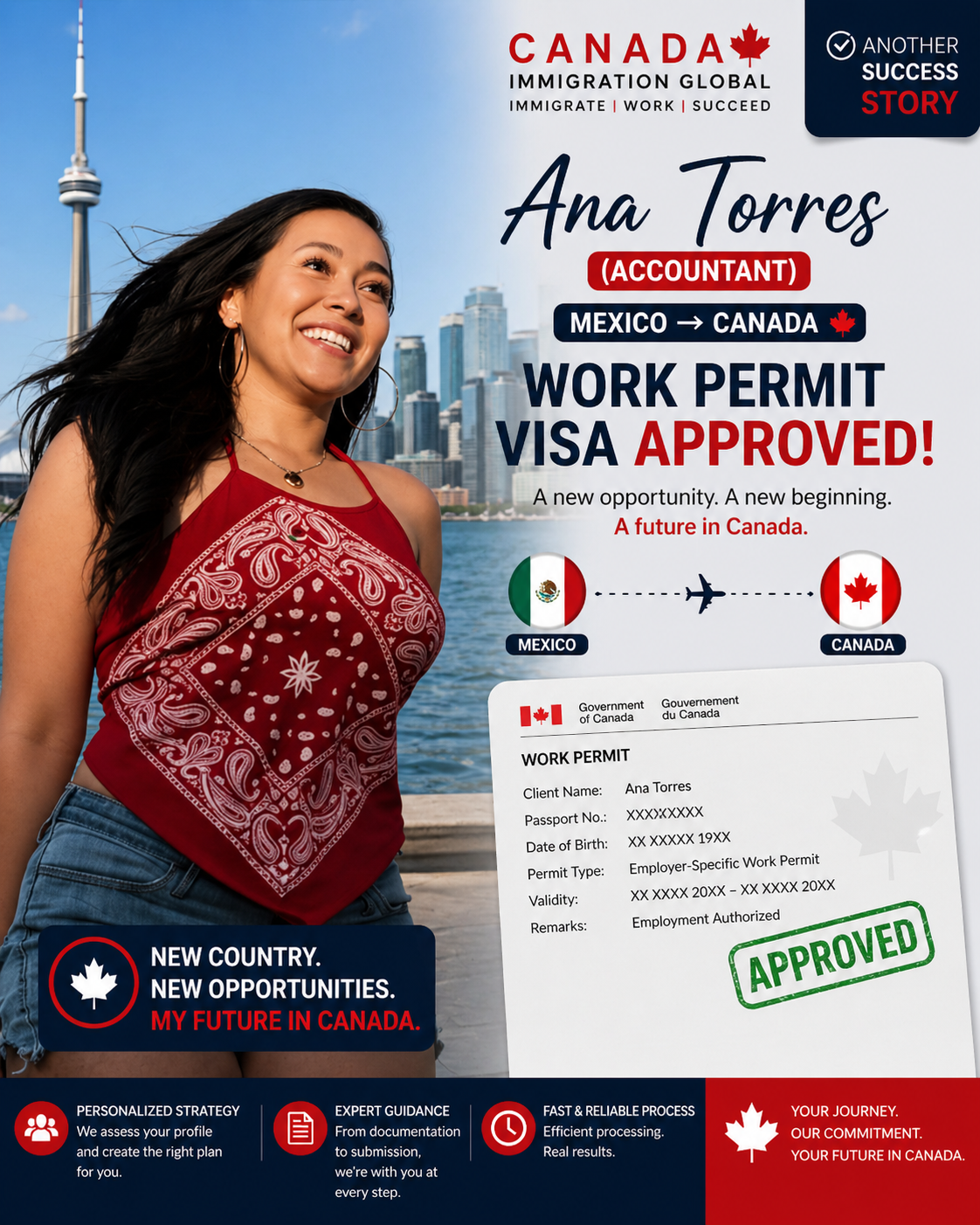
Ana Torres — Work Permit Visa Approved
From Mexico to Canada: Ana’s Work Permit Success Story
Ana Torres had always dreamed of advancing her accounting career in Canada while gaining valuable international work experience. As an accountant from Mexico, she was eager to seize new professional opportunities, but navigating the work permit application process and meeting all the documentation requirements felt challenging without expert guidance.
After carefully reviewing Ana’s profile, the team at Canada Immigration Global developed a personalized immigration strategy tailored to her qualifications, employment opportunity, and career goals. We guided her through every stage of the employer-specific work permit application, ensuring her documentation was complete and her application was submitted with confidence.
Our Support Included
- Comprehensive work permit eligibility assessment
- Personalized immigration strategy
- Employer-specific work permit guidance
- Documentation review and preparation
- Application submission support
- End-to-end immigration assistance
The Result
With expert guidance and a well-planned application, Ana successfully received approval for her Canadian Employer-Specific Work Permit, opening the door to exciting new career opportunities in Canada.
Today, Ana is preparing for a new chapter in Canada, where she can build her accounting career, gain international experience, and enjoy the opportunities that come with living and working in one of the world’s most welcoming countries.